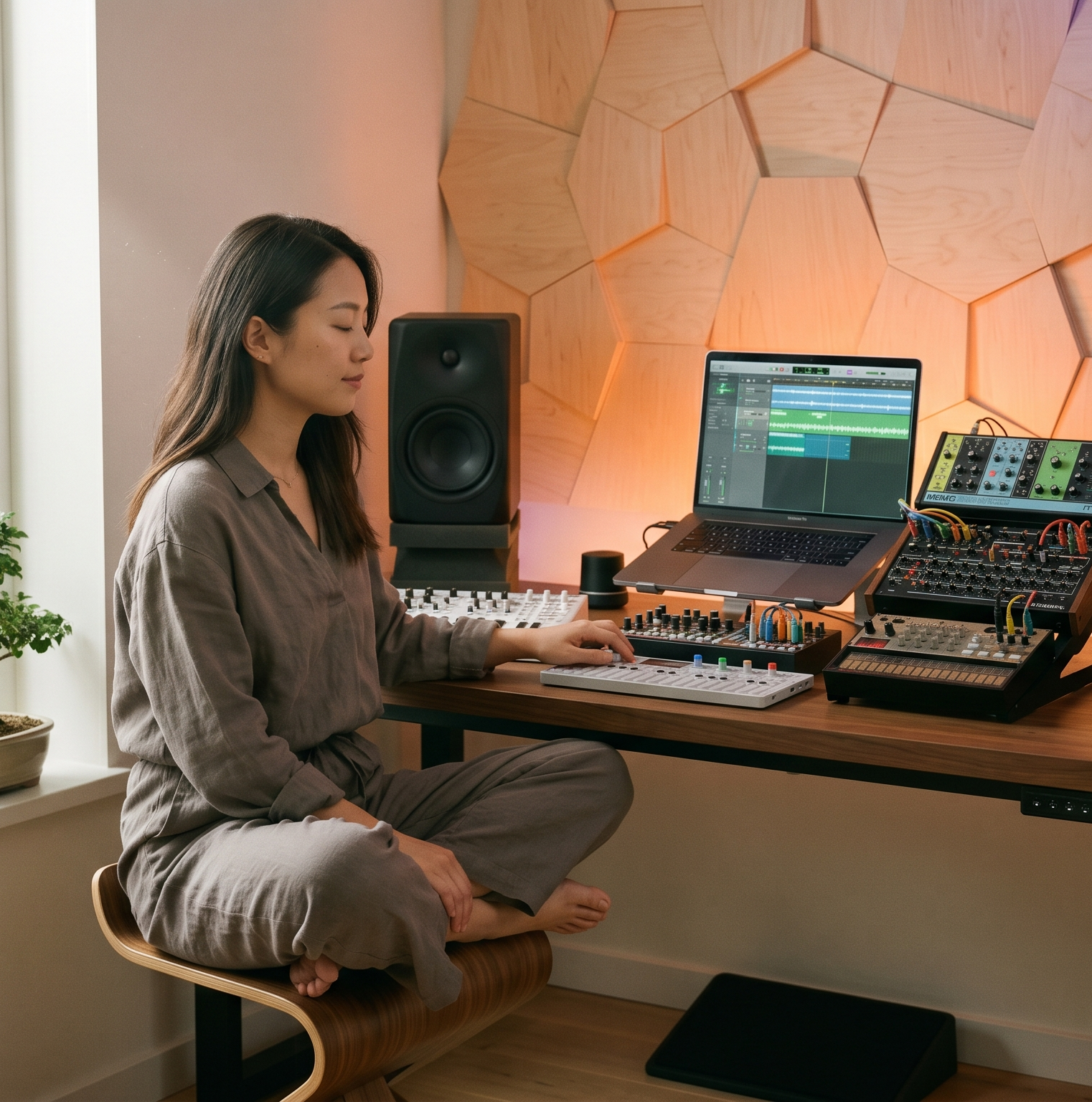
If you produce electronic music, you know the feeling. You buy a shiny new desktop synthesiser or a punchy analog drum machine. You unbox it, place it on your desk, and realise you now have to find an available power outlet, route a MIDI cable, and squeeze another pair of audio cables into your interface. Fast forward a few months, and your creative sanctuary looks like a dystopian electronic jungle.
While it is easy to obsess over buying the latest gear, the most impactful upgrade you can make to your studio doesn’t make a sound. It is your workspace organisation. For hardware-heavy music makers, a well-organized surface isn’t just about aesthetics; it is a fundamental driver of creativity, efficiency, and physical health. Here is why clearing the clutter is the best thing you can do for your tracks.
1. Zero-Friction Workflow: Catching the Muse
Inspiration is notoriously fleeting. If you have a melody in your head but you have to spend five minutes untangling a 5-pin MIDI cable, finding a free input channel, and moving a coffee cup just to reach your keyboard, the idea is usually gone.
An organised desk creates a frictionless environment.
- Ready-to-Record: When every synth is permanently patched, powered, and synced, all you have to do is hit record.
- Muscle Memory: Knowing exactly where your drum machine’s cutoff knob is without looking allows you to perform and tweak parameters intuitively, keeping you in a state of creative flow.
Your studio should act as a single, cohesive instrument. When you have to stop thinking about the music to think about the routing, the magic stops.
2. Eradicating the “Synth Hunch”
Desktop modules like the Roland Boutiques, Elektron boxes, or Korg Volcas are fantastic, but they are flat. Placing them flat on a standard-height desk forces you into terrible posture. You end up leaning forward, craning your neck, and arching your back to read small OLED screens or tweak tiny potentiometers.
Organizing your surface—specifically by utilising angled stands and multi-tier racks—has profound ergonomic benefits.
- Visual Alignment: Angling gear towards your face reduces neck strain and glare from overhead studio lights.
- Reachability: Tiers allow you to stack gear vertically, keeping everything within an arm’s reach without forcing you to stretch awkwardly across a deep desk.
- Wrist Health: Proper placement ensures your wrists remain at a neutral angle when programming sequences or playing drum pads.
3. The Psychology of a Clear Desk
There is a direct correlation between physical clutter and cognitive overload. When your peripheral vision is filled with tangled cables, empty coffee mugs, and scattered patch cables, your brain is subconsciously processing that chaos.
Cluttered vs. Organised Mindset
| The Cluttered Desk | The Organised Desk |
| Overwhelming: Too many options and visual distractions kill focus. | Intentional: Dedicated zones for sequencing, synthesis, and mixing. |
| Stressful: Constant low-level anxiety about knocking something over. | Inviting: The space draws you in and encourages long sessions. |
| Reactionary: Fixing problems (ground loops, bad cables) instead of writing. | Proactive: You sit down and immediately start creating. |
4. Signal Integrity and Cable Management
For synth users, cables are the lifeblood of the studio. Power, MIDI, USB, CV/Gate, and audio cables are all competing for space. Leaving them in a tangled pile isn’t just ugly; it actively degrades your setup.
- Interference: Running unbalanced audio cables parallel to power bricks and AC mains can introduce nasty 50/60Hz hums and digital noise into your recordings.
- Wear and Tear: Cables that are stretched tight, constantly stepped on, or hanging off the edge of a desk will eventually fail.
- Troubleshooting: If a channel suddenly goes dead, a managed cable system (using zip ties, under-desk trays, and color-coded labels) allows you to trace the culprit in seconds rather than pulling apart your entire rig.
5. Gear Protection and Longevity
Synthesisers and drum machines are expensive investments. A cluttered desk is a hazardous environment for delicate electronics.
When your gear has a dedicated, secure place on your desk, the risk of disaster plummets. You are far less likely to spill a drink on a £1,000 analog synth if it is elevated on a stand, and you won’t accidentally knock a drum machine onto the floor because it was precariously balanced on the edge of your desk to make room for a laptop. Furthermore, an organised setup makes it infinitely easier to dust or throw protective covers over your gear when not in use, protecting those sensitive faders and encoders.
The Takeaway
Upgrading your workspace doesn’t have to mean buying a massive, expensive studio desk. It starts with cable ties, a few desktop stands, and a commitment to intentional placement. By organising your surface, you remove the barriers between you and your music, ensuring that when inspiration strikes, your studio is ready to capture it.